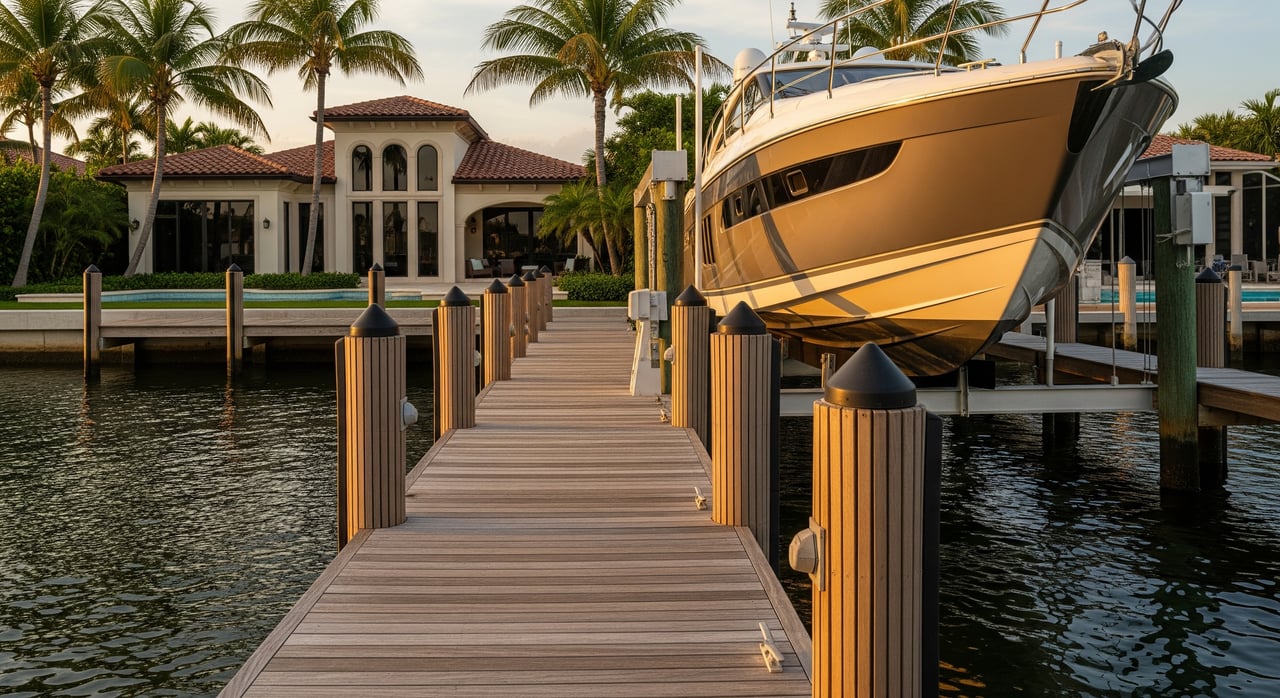
Salt air, quick ocean access, and a boat in the backyard are the dream in Jupiter Inlet Colony. The real question is how you keep that boat ready and protected. Should you invest in a boat lift or a dock, or both? The right choice affects your daily routine, long-term maintenance, and total project cost.
You want a setup that fits your vessel, your lifestyle, and the inlet’s unique conditions. In this guide, you will learn how local tides and currents shape design, what materials last, how permitting works, and the practical pros and cons of each option. Let’s dive in.
Jupiter Inlet Colony conditions to plan for
Strong local forces shape how docks and lifts perform here. Jupiter Inlet sits in a micro to meso tidal environment with a relatively small tidal range, but currents can run hard near the inlet channel. Episodic storm surge, tropical systems, and boat wakes from ocean traffic can add energy and stress to waterfront structures.
Shallow flats in the area often support seagrass and mangroves. These habitats are protected, so any construction that shades seagrass, disturbs the bottom, or alters shorelines can trigger permit conditions or mitigation. This is a key reason to document site conditions before you design.
Local boating habits also matter. Many owners run center-console sportfishing boats, runabouts, bay boats, or small cruisers in the 18 to 40 foot range. Quick access to offshore fishing and the Intracoastal is common, so fast, reliable boarding and launch systems tend to win.
What does this mean for your project? Near the inlet, pile-driven docks and pile-mounted lifts are favored for strength and stability. Floating systems can work in protected basins, but they are more vulnerable in exposed locations.
Boat lift vs. dock: what fits best here
Fixed pile docks
A fixed dock sits on driven piles with the deck set at a set elevation. It creates a stable platform for guests, gear, and utilities like power and water. You can elevate it to meet storm surge and flood considerations and support frequent foot traffic.
There are tradeoffs. Piles take wave and surge loads, and you may need steps, a ladder, or a boarding aid to handle tide changes comfortably. Construction can disturb the seabed more than other options. A fixed dock is best if you want a robust entertaining space or plan to tie off multiple small craft at once.
Floating docks
Floating docks rise and fall with the tide, which keeps boarding heights consistent. They can be cost-effective for a given usable deck height and feel comfortable underfoot.
The catch is exposure. Inlet energy, surge, and large wakes can damage or dislodge floating systems. They also require careful anchoring and more frequent storm-related maintenance. Floating docks are better suited to protected basins rather than lots near open inlet flow.
Boat lifts
Residential lifts come in several types, including cradle or bunk lifts mounted on piles, hydraulic or electric systems, and smaller PWC lifts. The big advantage is hull protection. Keeping your boat out of the water reduces marine growth and corrosion, cuts cleaning time, and can extend the vessel’s service life.
Lifts do add mechanical and electrical responsibilities. Motors, cables, controls, and hydraulics need regular service, and lifts have capacity and beam limits. Wide-beam center consoles or catamarans may require custom solutions or may not fit common lift sizes. Inlet currents can increase stresses, which is another reason to select capacity and hardware conservatively.
Combination setups
You do not have to choose one or the other. A short fixed dock with an integrated lift at the end is common on narrower lots. In some cases, a floating lift can tie to a fixed platform, but inlet exposure still demands careful design and anchoring.
Match the setup to your boat and lifestyle
Your vessel and how you use it should drive the decision. Use this quick checklist to align the choice with your priorities.
- Vessel size and beam
- 18 to 24 foot runabouts: lifts or floating docks both work; lifts are often the most convenient.
- 24 to 36 foot center consoles: many lift options exist, but confirm beam, weight, and bunk style for a secure fit.
- Boats over 40 feet or wide catamarans: residential lifts may not be practical; a dock or marina slip is typical.
- PWCs and tenders: dedicated PWC lifts or davits are simple and economical.
- Frequency of use
- Daily or weekly use favors a lift for quick launch and reduced fouling.
- Occasional use can lean toward a simpler dock with proper fenders and lines.
- Care and appearance
- If you want to avoid antifouling paint and heavy scrubbing, a lift helps keep the hull clean.
- If you want a large social space for guests, a fixed dock delivers more deck area.
- Exposure and access
- Lots with more current or wake benefit from pile-mounted lifts and robust fixed docks.
- Sheltered sites can consider floating systems for easier boarding.
- Resale and insurance
- A well-designed, well-maintained lift can attract boater buyers.
- Insurers may require specific anchoring or elevation details for inlet exposure.
Materials and maintenance that last
Piles and structure
Pressure-treated timber piles are traditional and effective for many sites. Over decades, the splash zone can suffer from rot or marine borers, so plan periodic inspections and protective caps or wraps. Composite or fiber-reinforced polymer piles resist corrosion and reduce maintenance, but they cost more. Coated steel piles are strong and compact yet require consistent corrosion protection. Concrete piles are durable for heavier structures, though installation is more complex.
Decking choices
You can choose from tropical hardwoods such as Ipe for long wear, pressure-treated lumber for a lower upfront cost, or composite and PVC decking for lower maintenance and slip resistance. Composite and PVC options often offer the best long-term balance for a residential dock that sees regular foot traffic.
Lift systems
Aluminum frames are common for residential lifts due to corrosion resistance and low weight. Use marine-grade stainless steel hardware wherever possible and manage dissimilar metal contact with isolators and sacrificial anodes. Choose cables, slings, and bunks based on your hull type. Deeper V hulls often sit best on custom bunks that spread loads evenly.
Electrical and safety
All lift power and dock electrical work should follow the National Electrical Code requirements for marinas and boatyards, including GFCI protection and proper bonding. Remote shutoffs, surge protection, and lockable controls improve safety and can help meet insurance expectations.
Maintenance rhythm
- Inspect piles, cross members, and fasteners annually. Tighten hardware and replace deteriorated components as needed.
- Service lift motors, gearboxes, and cables annually. Check electrical GFCI function and control boxes.
- Monitor corrosion control systems. Replace sacrificial anodes when spent and inspect for galvanic corrosion at mixed-metal connections.
- Clean marine growth from any submerged parts, even if the hull stays on a lift.
- After any storm or surge event, inspect piles, pile caps, anchorage, lift alignment, and wiring before use.
Lifespan and costs to expect
With routine care, timber pile docks can serve for decades, with decking replacement typically needed on a 10 to 20 year cycle. Composite decking often lasts longer with less upkeep. Aluminum lift structures commonly deliver long service when maintained, although motors and controls usually need earlier replacement.
Budget ranges vary by site and exposure. Small docks can start in the low tens of thousands. Higher-end fixed or floating docks and more complex piling can run from the mid tens into the low hundreds of thousands. Residential lifts for smaller boats start in the low five figures, while heavier or specialty lifts for 30 to 40 foot boats often reach the mid to high five figures. Shoreline stabilization, environmental mitigation, and permitting add to total cost.
Permitting in Jupiter Inlet Colony and Palm Beach County
Plan for a multi-agency review. At the federal level, the U.S. Army Corps of Engineers regulates structures in navigable waters and any dredge or fill. Some projects qualify for general permits that move faster. Others require an Individual Permit with a longer timeline.
At the state level, the Florida Department of Environmental Protection manages authorizations for sovereign submerged lands and resource protections. The Florida Fish and Wildlife Conservation Commission can impose manatee and wildlife conditions. Regionally and locally, Palm Beach County and the Town of Jupiter Inlet Colony review building plans, environmental considerations, dock dimensions, electrical, and any coastal construction rules.
A typical sequence looks like this:
- Hold a pre-application meeting with the Town and County staff to confirm requirements and constraints.
- Complete a site survey with bathymetry, seagrass mapping, and riparian boundaries.
- Apply for local building permits and any county environmental resource permits.
- Submit state submerged lands and environmental applications if the footprint extends over state bottom or affects protected resources.
- Submit a federal permit application or request verification under a general permit.
- Address any additional reviews, such as wildlife or cultural resources.
Timeline ranges are site-specific. A straightforward project with complete designs and no resource impacts can move in roughly 8 to 12 weeks. Many projects take 3 to 6 months when state and federal reviews are involved. More complex cases that require an Individual Permit or mitigation can extend beyond 6 to 12 months. Submitting complete surveys and being flexible on design details can shorten the path.
When a dock makes sense vs. a lift
Choose a dock if
- You want a generous entertaining platform with utilities and space for guests.
- You keep multiple small craft or PWCs tied alongside.
- Your lot is relatively exposed and you prefer fewer mechanical systems to service.
- Your vessel is too large or wide for a practical residential lift.
Choose a lift if
- You want faster, cleaner departures and minimal hull fouling.
- You run offshore often and prefer to keep the boat dry and ready.
- Your vessel fits within lift beam and weight limits, and you have power available.
- You want to reduce long-term hull maintenance and possibly extend vessel life.
Many owners land on a hybrid: a compact fixed dock for guests and gear, plus a properly sized pile-mounted lift for the primary boat.
How to scope and bid your project
Before you ask for pricing, gather and decide on a few essentials.
- Boat details: length, beam, dry weight, hull type, typical fuel/load, and how often you use it.
- Function: storage first, entertaining first, or a balance of both. Include PWC or tender needs.
- Exposure: the lot’s relation to the inlet, prevailing waves, wakes, and any protective features.
- Environmental constraints: presence of seagrass or mangroves near the footprint.
- Utilities: shore power location, desired control type for lift, and preferred lighting.
- Style: pile and decking materials, railings, and neighborhood standards.
When you request proposals from marine contractors, include:
- A site survey with property lines, mean high water line, existing seawall or pier, and bathymetry.
- Clear vessel specs and usage patterns.
- A request for multiple design options. Ask to see fixed dock only, fixed plus lift, and floating plus lift alternatives.
- Pile count, pile depth, and scour protection details in each concept.
- A permitting plan that defines responsibilities and expected timelines.
- A lifecycle maintenance plan, including annual lift service and anode replacement schedule.
- Insurance, bonding, warranty terms, and post-storm response expectations.
Smart questions to ask finalists include: local experience in Palm Beach County and Jupiter Inlet Colony, who manages permitting and surveys, typical lift manufacturers they install and service, how they handle galvanic protection, and estimated lead times for equipment and construction in a coastal site.
Next steps for buyers and owners
Your waterfront should work as beautifully as it looks. Start with a quick assessment of your boat, exposure, and goals, then meet with permitting staff and a local marine contractor to confirm constraints. A conservative, inlet-ready design and a complete application file will save time later.
If you are buying or selling in Jupiter Inlet Colony, we can help you align your waterfront plans with the right property and the right team. Our concierge approach coordinates due diligence, trusted local contractors, and post-close upgrades so your dock or lift fits your lifestyle from day one. Ready to talk through your options? Connect with the team at Premier Properties of South Florida, Inc..
FAQs
What matters most when choosing a boat lift or dock in Jupiter Inlet Colony?
- Local inlet currents, storm surge exposure, your vessel’s size and beam, and the presence of seagrass or mangroves should drive the design and permitting path.
How long does it take to permit a dock or lift in Palm Beach County?
- Simple projects can move in about 8 to 12 weeks, while typical projects with state and federal reviews often take 3 to 6 months and complex cases can exceed 6 to 12 months.
Are floating docks a good idea near the Jupiter Inlet channel?
- Floating systems offer easy boarding but are more vulnerable to waves, surge, and strong currents, so they are better suited to protected basins than exposed inlet locations.
Do seagrass and mangroves affect my design and approvals?
- Yes, these protected habitats often trigger conditions, mitigation, or design changes such as pier grating or adjusted footprints, so early mapping and surveys are essential.
What boat sizes usually work on residential lifts here?
- Many lifts accommodate 18 to 36 foot monohulls with the right capacity and bunk setup, but large vessels over 40 feet or wide catamarans often exceed practical residential lift limits.
What ongoing maintenance should I plan for with a lift or dock?
- Expect annual inspections of piles and hardware, yearly lift servicing for motors and cables, corrosion control with sacrificial anodes, and thorough post-storm checks before use.