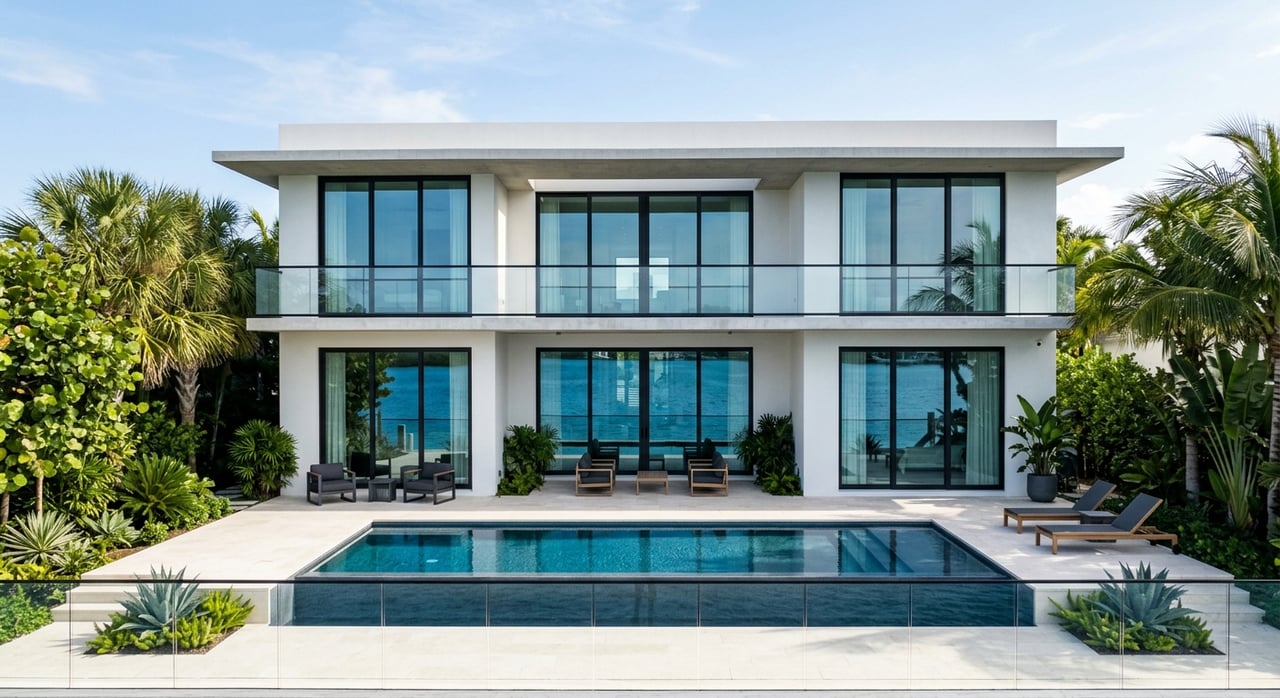
If you have spent any time looking at Jupiter real estate, you already know not every waterfront address offers the same experience. Jupiter Inlet Colony stands out because it is not simply a beachside neighborhood in a larger town. It is a tiny, residential-only municipality with a very specific setting, limited footprint, and a daily rhythm shaped by the ocean, the inlet, and the Intracoastal. If you want to understand why buyers watch this pocket so closely, this guide will walk you through what makes it different. Let’s dive in.
A rare footprint in Jupiter
Jupiter Inlet Colony has an unusually small physical and civic footprint. Official town materials describe it as roughly 0.2 square miles, 100% residential, and home to about 236 residences. That alone makes it feel very different from larger coastal communities where residential streets mix with shops, public gathering areas, and heavier through-traffic.
That residential-only structure matters when you think about lifestyle. In Jupiter Inlet Colony, the focus is almost entirely on homes, shoreline access, and community upkeep. The town also notes a private Jupiter Inlet Beach Club within the community, which adds to the distinct identity of the area.
The town’s own organization also reinforces that close-knit feel. Jupiter Inlet Colony has its own police department, along with committees focused on social events, building and zoning, and beautification. For many buyers, that helps explain why the community often feels more like an enclave than a typical neighborhood.
The location is unlike anywhere else
One of the biggest reasons Jupiter Inlet Colony stands apart is geography. Jupiter Inlet is the point where the Loxahatchee River and Intracoastal Waterway converge into the Atlantic Ocean. That creates a compressed, water-defined setting that does not follow the pattern of a conventional mainland grid.
In practical terms, you are looking at a place shaped on multiple sides by water rather than by broad inland expansion. That changes how the neighborhood feels, how homes are positioned, and how buyers think about value. In Jupiter Inlet Colony, the setting is not just part of the appeal. It is the foundation of it.
This also helps explain why the area feels so distinct from nearby parts of Jupiter. While other neighborhoods may offer proximity to the water, Jupiter Inlet Colony is built around it at nearly every turn. That difference shows up in both the streetscape and the home inventory.
Housing feels tailored to the setting
The housing stock in Jupiter Inlet Colony is another reason the market draws attention. Recent listings suggest many interior parcels are around 8,900 to 9,600 square feet, which is roughly a quarter acre. That creates a neighborhood pattern where even non-waterfront homes can still sit on meaningful lots in a very limited geographic area.
At the same time, the community includes significantly larger water-oriented parcels. Recent examples include oceanfront lots around 0.46, 0.48, and 0.50 acres, along with a nearly 1-acre oceanfront double lot. In a town this small, lot variety like that can have an outsized effect on pricing, design opportunities, and long-term buyer interest.
The homes themselves are not one-note. Recent examples include original properties from the 1960s and 1970s as well as newer custom residences, including a 2019-built home. Interior sizes in those examples range from about 2,500 to nearly 5,000 square feet, which means buyers may find everything from updated legacy homes to more recently built custom properties.
Water orientation shapes the lifestyle
In many Jupiter neighborhoods, being near the water is a feature. In Jupiter Inlet Colony, water orientation is central to how many homes live day to day. Recent examples include oceanfront parcels on Ocean Drive, beach-path properties, and homes with direct Intracoastal frontage.
That creates a different kind of buying conversation. Instead of only asking whether a home is close to the beach, you may be comparing oceanfront exposure, direct Intracoastal frontage, beach-path access, lot depth, and how a home is positioned within this very compact town. Those are highly location-specific details that can influence both lifestyle and market appeal.
Property features in recent listings also reflect the expectations many buyers bring to this pocket of the market. Common examples include single-family construction, pools, garages, impact doors and windows, and updated kitchens. In a place this small, the interplay between lot, water orientation, and level of renovation often matters as much as raw square footage.
Beach access is intimate by design
Another key difference is the way beach access works. Town communications identify North and South Walkways as beach-cleanup meeting points, and a 2025 engineering memo states that existing beach access ways are located north of 8 Ocean Drive and 17 Ocean Drive. The same memo says those access ways are about 20 feet wide and include decks with benches.
Compared with larger beach communities, that points to a much more intimate shoreline pattern. Access is concentrated in a few locations rather than spread across a wide public beachfront system. For buyers who value a quieter, more contained beach experience, that can be part of the appeal.
It also tells you something important about how the town functions. This is not a place where the shoreline is treated as an unlimited public corridor. It is a small coastal municipality managing a very specific stretch of beach with care and planning.
Shoreline stewardship is part of the identity
In Jupiter Inlet Colony, beach management is not a background issue. Town priorities for 2025 explicitly focus on maintaining the town’s portion of the beach, identifying access, and funding resiliency and restoration projects. That makes shoreline stewardship a visible civic priority, not just an occasional talking point.
For buyers and owners, that matters because it reflects the realities of owning in a highly coastal setting. The town’s engineering materials note that current access ways do not provide a dedicated route for restoration trucks, which shows how even routine coastal planning can be more specialized in a compact barrier-island environment.
This focus on maintenance and restoration is one of the clearest ways Jupiter Inlet Colony differs from a more conventional beach market. Here, the beach is not just scenery. It is an asset the town actively works to preserve.
How it differs from Jupiter and Tequesta
The easiest way to understand Jupiter Inlet Colony is to compare it with nearby coastal options. Jupiter proper offers a broader, more public waterfront structure. The Riverwalk is planned to provide public access along about 2.5 miles of the Intracoastal and Jupiter Inlet, connecting to marinas, retail, restaurants, public docks, gathering spaces, and waterfront parks.
Jupiter also has about 3.4 miles of beaches, multiple crossovers, ADA-accessible access points, and dog-friendly beach areas. That creates a more dispersed and publicly organized beachfront experience. It is a different model from Jupiter Inlet Colony’s small-scale, residential-only setting.
Nearby Tequesta offers another point of contrast. Coral Cove Park is a county-managed public beach park with parking, restrooms, showers, a playground, guarded and unguarded beach frontage, and Intracoastal frontage. That kind of public amenity package serves a broader visitor base than the concentrated beach-access pattern in Jupiter Inlet Colony.
When you compare these places side by side, Jupiter Inlet Colony’s identity becomes clearer. Its appeal comes from scarcity, setting, and a tightly defined residential environment rather than a large public waterfront network.
Why scarcity matters in this market
Scarcity can influence how buyers view value, and Jupiter Inlet Colony is a clear example. With about 236 residences in a 0.2-square-mile, residential-only municipality, supply is inherently limited. Add in the inlet-mouth location, a mix of oceanfront and Intracoastal opportunities, and the town’s focused shoreline character, and you get a market that feels highly specific.
That does not mean every property serves the same buyer. Some buyers may prioritize original charm and location. Others may focus on newer construction, updated finishes, or a lot with exceptional water orientation. But across those preferences, the same theme tends to hold true: there are simply not many opportunities in a community like this.
For sellers, that scarcity can support strong positioning when a property is presented well. For buyers, it means understanding the nuances of lot placement, home condition, and water exposure is especially important in a market where each address can offer a very different experience.
What buyers should watch closely
If you are considering Jupiter Inlet Colony, it helps to look beyond broad labels like “beach home” or “waterfront property.” This is a market where fine-grained details can shape both lifestyle and value.
Pay close attention to:
- Whether the home is interior, beach-path, oceanfront, or direct Intracoastal
- Lot size and how it compares with other homes in this very small inventory base
- The age of the home and whether it is an original residence, a major renovation, or newer construction
- Features such as impact windows and doors, garage space, pool layout, and outdoor living areas
- How the property fits into the town’s compact layout and shoreline-oriented setting
In a market this specialized, local knowledge matters. Small differences in location and orientation can have a meaningful effect on how a property lives and how it may be perceived by future buyers.
Why local guidance matters here
Jupiter Inlet Colony is one of those markets where broad regional knowledge is helpful, but hyperlocal insight is even better. Because the town is so small, each listing enters a context shaped by shoreline access, lot characteristics, housing era, and the town’s distinct residential-only structure.
That is where a boutique, concierge-style approach can make a real difference. If you are buying, you want guidance that helps you compare not just prices, but the practical differences between one rare opportunity and another. If you are selling, careful presentation, smart positioning, and clear storytelling can help communicate why your property stands apart in such a limited and specialized market.
At Premier Properties of South Florida, Inc., that kind of support is part of the process. From buyer representation to listing strategy and concierge-level guidance, the goal is to help you move forward with clarity in one of the area’s most distinctive coastal communities.
If you are thinking about buying or selling in Jupiter Inlet Colony, connect with Premier Properties of South Florida, Inc. for local insight and a personalized strategy.
FAQs
What makes Jupiter Inlet Colony different from other Jupiter neighborhoods?
- Jupiter Inlet Colony is a tiny, residential-only municipality of about 0.2 square miles with about 236 residences, a water-defined setting, concentrated beach access points, and a strong civic focus on shoreline maintenance.
What types of homes are found in Jupiter Inlet Colony?
- Recent listings show a mix of older original homes and newer custom residences, including interior homes, beach-path properties, oceanfront homes, and direct Intracoastal homes, with many featuring pools, garages, and impact-rated openings.
How does beach access work in Jupiter Inlet Colony?
- Town materials identify existing beach access ways north of 8 Ocean Drive and 17 Ocean Drive, with access areas about 20 feet wide and including decks with benches, which reflects a more concentrated and intimate access pattern.
How is Jupiter Inlet Colony different from Jupiter’s public beaches?
- Jupiter offers a broader public beachfront network with about 3.4 miles of beaches, multiple crossovers, ADA-accessible access points, and dog-friendly areas, while Jupiter Inlet Colony has a smaller, more residentially focused shoreline setup.
Why do buyers consider Jupiter Inlet Colony a scarce market?
- Buyers often view it as scarce because the town is very small, fully residential, and includes a limited number of homes in a distinctive inlet-mouth location with both oceanfront and Intracoastal opportunities.